Early Orthodontic Treatment for Children

When Should Your Child First See an Orthodontist?

The American Association of Orthodontists recommends that children have their first orthodontic evaluation by age 7, or earlier if an orthodontic concern is identified. At this age, most children have a combination of baby teeth and permanent teeth, allowing an orthodontist to evaluate developing tooth alignment, jaw growth, and the eruption of permanent teeth.

An early evaluation does not mean your child will need braces right away. Many children do not need treatment at this age. The goal is to identify concerns that may benefit from early intervention and determine the most appropriate time to begin treatment.

Your family dentist may also recognize developing orthodontic concerns and recommend an evaluation before age 7.
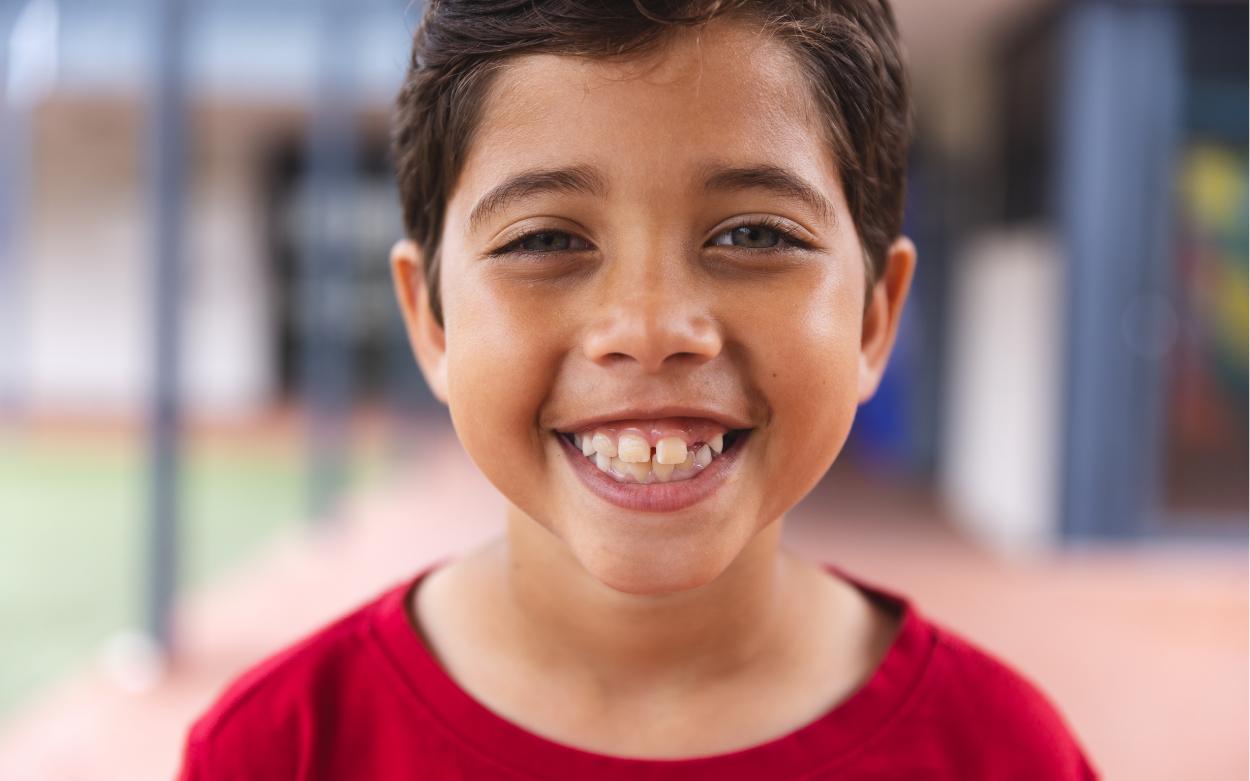
Smiling child of about seven, the age recommended for a first orthodontic checkup

Our 7 & Up Kids Club: Growing Smiles, Guided with Care

7 & Up Kids Club

At Pacific Orthodontics, we believe that the right treatment at the right time makes a difference. If your child is not yet ready for orthodontic treatment, we offer complimentary observation visits every 6–12 months through our 7 & Up Kids Club.

During these visits, Dr. Doppel monitors your child's dental development, the eruption of permanent teeth, and changes in jaw growth. When treatment becomes appropriate, we will discuss our recommendations and explain the available options.

Our goal is to provide the care your child needs when it will be most beneficial—not to begin treatment before it is necessary

What Can Interceptive Orthodontic Treatment Accomplish?

For some children, early, or interceptive, treatment can address specific orthodontic concerns while the jaws and permanent teeth are still developing. Depending on your child's needs, treatment may help to:

  • Guide jaw growth and improve the relationship between the upper and lower jaws.
  • Guide incoming permanent teeth into more favorable positions.
  • Preserve or create space for permanent teeth.
  • Reduce the risk of injury to prominent front teeth.
  • Address certain developing bite problems and reduce the risk of some permanent teeth becoming impacted.
  • Help correct oral habits, such as persistent thumb sucking or mouth breathing, that may affect tooth and jaw development.

Not every child will benefit from early treatment. Dr. Doppel will evaluate your child's individual needs and recommend treatment only when there is a clear benefit to starting early.

Will My Child Still Need Braces Later?

Interceptive treatment does not always eliminate the need for braces during the teen years.

The purpose of early treatment (Phase I) is to address specific problems that are best treated while a child is still growing. Because many permanent teeth have not yet erupted, additional treatment may be needed later to align all the teeth and refine the bite.

This second stage, often called Phase II treatment, typically takes place during the preteen or teenage years. In some cases, interceptive treatment can simplify later orthodontic care, and some children may not need a second phase of treatment.

Dr. Doppel will explain what to expect based on your child's development and treatment needs. With regular observation and an individualized plan, we can help you make informed decisions about your child's orthodontic care.

Problems to Watch for in Growing Children

Malocclusions (“bad bites”) like those illustrated below, may benefit from early diagnosis.
Front crossbite: the upper front teeth bite behind the lower front teeth
Crossbite of Front Teeth
Top teeth are behind bottom teeth
Back crossbite: the upper back teeth bite inside the lower back teeth
Crossbite of Back Teeth
Top teeth are to the inside of bottom teeth
Crowding: teeth overlapping because there is not enough room in the jaw
Crowding
Teeth overlap because there is not enough room in the jaw
Open bite: the front teeth do not meet when the back teeth are closed
Open Bite
Front teeth do not meet when back teeth are closed
Protrusion (overjet): the upper front teeth sit well ahead of the lower front teeth
Protrusion (Overjet)
Top front teeth sit well ahead of the bottom front teeth
Deep bite (overbite): the upper front teeth cover too much of the lower front teeth
Deep Bite (Overbite)
Top front teeth cover too much of the bottom front teeth
Underbite: the lower teeth sit in front of the upper teeth when the back teeth are closed
Underbite
The lower teeth sit in front of upper teeth when back teeth are closed
Spacing: gaps between the teeth where the space is larger than the teeth need
Spacing
Gaps between the teeth where the space is larger than the teeth need
Oral habits: thumb or finger sucking
Oral Habits
Sucking on thumb, fingers

Other Issues 

If you notice any of the following in your child, please check with us.

  • early or late loss of baby teeth
  • difficulty in chewing or biting
  • mouth breathing
  • jaws that shift or make sounds
  • speech difficulties
  • biting the cheek or the roof of the mouth
  • facial imbalance
  • grinding or clenching of the teeth

Schedule Your Child's Orthodontic Evaluation

An early evaluation is a simple first step toward understanding your child's developing smile. Whether treatment is needed now or simply monitoring over time, Pacific Orthodontics is here to help guide your family through the process.

American Dental Association
Member, American Association of Orthodontists
American Board of Orthodontics board certified
Invisalign
The Edward H. Angle Society of Orthodontists
Pacific Orthodontics Seattle logo with triggerfish
linkedin facebook pinterest youtube rss twitter instagram facebook-blank rss-blank linkedin-blank pinterest youtube twitter instagram